


We are moving from economic theory to personal mechanics. Here is the framework we will use to find your “Power” and your “monopoly of one”:
The Optimization Trap: Why optimizing for generic competence is keeping you stuck at a Local Maxima.
Identifying Your “CPU”: Identifying the consistent, internal strengths you must leverage to scale.
Respecting Your “I/O Ports”: Identifying where your flexibility allows you to read the market and evaluate others.
Using the Correct Personalized “Search Algorithm”: Installing the correct decision-making process to navigate your career.
Look the headline below:
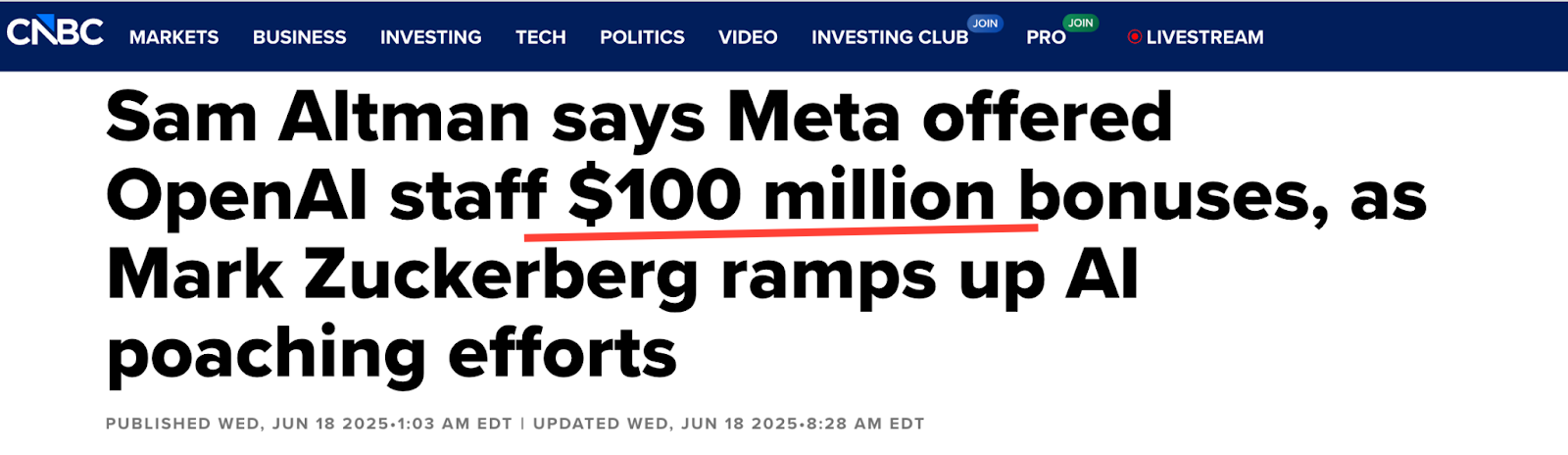
The biggest lie in your annual performance review is that you need to check all the boxes.
The notes on your performance review may tell you to fix your weaknesses. The actions on areas of improvement may be that they want you to take a Toastmaster course or improve your literacy in AI to fill a gap. I think that’s the incorrect way to go about it.
The top 1% of engineers are not 10x faster than you.
The tech ecosystem does not operate on a Bell Curve. In a bell curve, most people are average and huddled in the middle. But look around your organization. The “middle” is exactly where the layoffs happen. The middle is where AI is currently eating jobs alive.
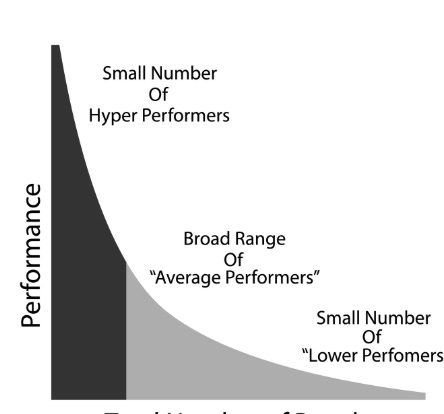
Instead, tech has always operated on a Power Law.
Think of a bell curve like a flat suburban office park where every building is roughly two stories tall. A Power Law is a single skyscraper surrounded by empty lots.
You cannot afford to be a two-story building anymore. If your value is just “general competence” or being a “good team player,” you are currently being automated. Your only protection is your unique differentiation.
You need to find your skyscraper.
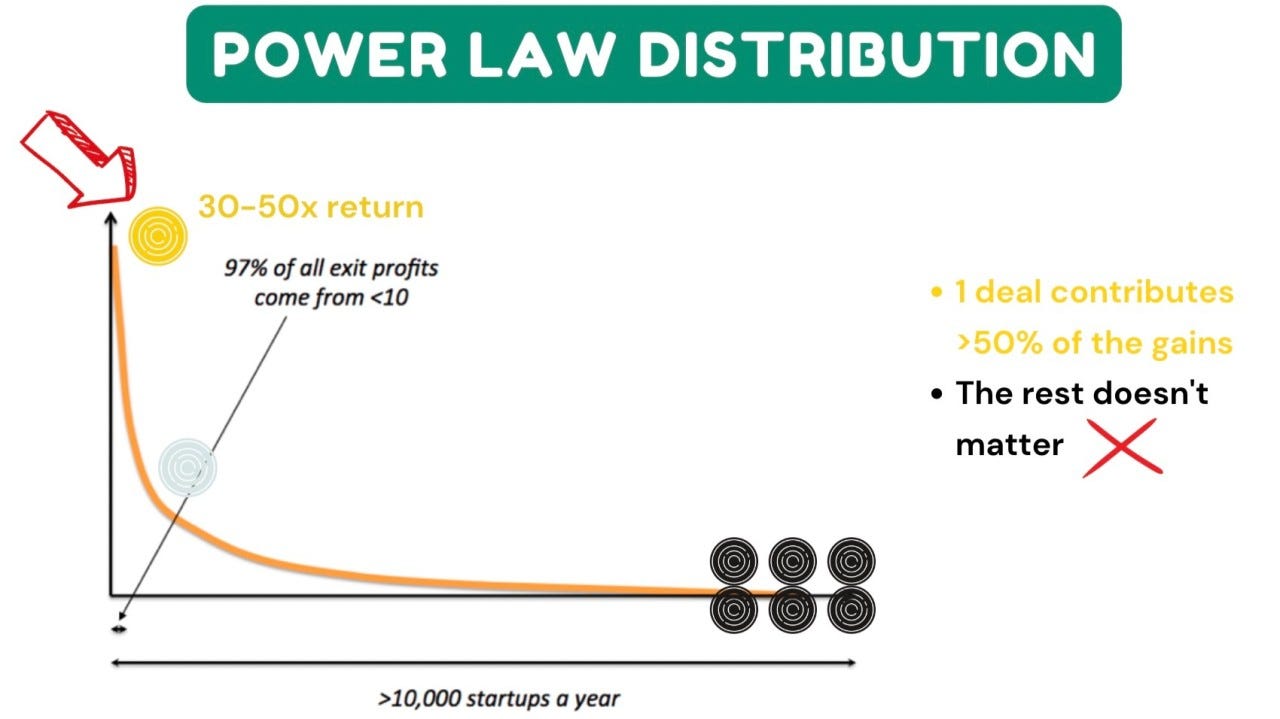
Look at the VC model. Power Laws exist everywhere, even in the companies you work at (but you know this.) And these fundamental laws of the losers and winners, existed long before Sama and Zuck started duking it out over AI talent. But AI has just accelerated the reality.
Lean Into Your Strengths
Most of us spend our careers climbing the wrong hill. In data science, we call this a “Local Maxima.”
A local maxima is a small hill that looks like the top of the world when you are standing on it. In our career it may take the form of the title of “Group Product Manager” or “Staff Engineer”. With it, comes a nice status and a plenty of validation.
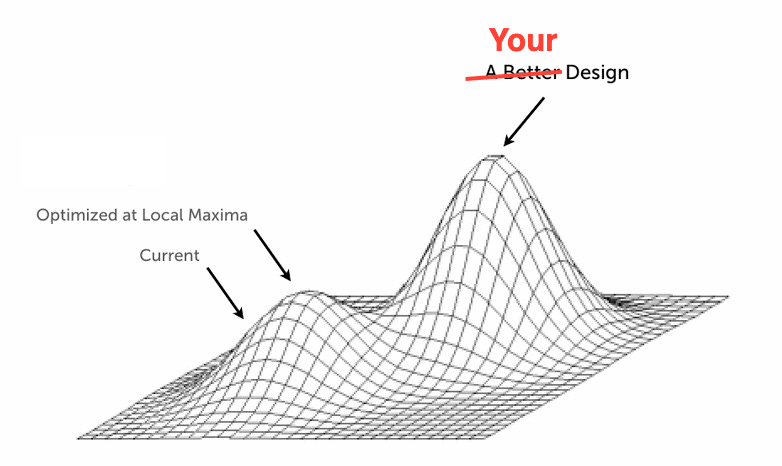
But a local maxima is often a trap, however optimized it appears.
A promotion in a role that drains you is just a set of golden handcuffs. It keeps you too busy to see the GLOBAL maxima. The global maxima is the highest peak in the landscape. It is where your contribution creates exponential returns with half the resistance.
The problem is that you cannot work your way from a Local hill to a Global peak just by trying harder (not in most cases anyway). You have to go back down to the valley and switch mountains.
That is terrifying. I know because I did it. A few times. I left the comfort of the known for the chaos of the unknown from Engineer to UX Designer. From Designer to Product Manager and then to be a Founder and business owner.
Let me drive home the concept of finding your global maxima another way — this time via inversion. If you use a simple mental model of your career as an individual contributor, manager, leader, founder or consultant and treat it like a game you may find you might have experienced this more. In the tech product context, it’s like building the best new feature for your users without truly knowing if that’s what they wanted in the first place.
Know what people need and what they want is important.

Except this time, the product and user is you.
Heed Boring_Business’ advice:
“The lesson here is simple: what you work on is much more important than how hard you work.”
If your value proposition is doing what the average person does but slightly better you are in the kill zone. An API will soon rent that skill for pennies. You cannot grind your way out of a game that is being automated.
To find your global maxima you have to stop looking at the external job market and start looking at your internal hardware. You cannot guess your way to the peak. You need the schematics.
In Human Design for Tech Workers, we decode you into the key Success Codes for your career as a first step to move from the local to the global maxima.
Here’s the 3 of the most important Success Codes:
Your CPU (Definition)
Your I/O Ports (Openness)
Your Search Algorithm (Strategy)
1: Identifying Your CPU (Definition)
In a Power Law distribution, knowing your consistent Strengths is your exponential potential.
AI is terrifying to the average worker because LLMs are the ultimate Consistent Average. They can produce B+ work across every domain infinitely. If you are trying to be a Generalist you are competing directly against a zero-marginal-cost algorithm.
You cannot win on volume. You must win on Definition.
In Human Design for Tech Workers, we look at your Defined Functions and Consistent Strengths. These are the coloured parts of your chart. Think of this as your Source Code. It is hard-coded and always on. This is your leverage.
If you possess the Strength of Innovation your leverage is bringing order out of chaos during a pivot. You are not designed to maintain the status quo.
If you possess the Strength of Rhythm your leverage is stabilizing a team’s workflow during a crunch. You are not designed to disrupt for the sake of disrupting.
The mistake is trying to rewrite your Source Code to match the job description. You try to emulate a Builder doing the work when you are designed to be an Advisor guiding the work.
2. Finding Your I/O Ports (Openness)
Here is the counter-intuitive part. The things you are not naturally good at are actually where you can make the most profit. You just have to stop trying to “do” them.
These are your Open Functions. This is your potential cash flow machine.
Think of your Definition as your CPU. Think of your Openness as your I/O Ports. You do not generate the data here. You read it.
But this is also where you find the Shadows or the local maxima trap.
Open Conceptualization Function
The Trap: You feel pressure to be certain so you memorize data to look smart in meetings.
The Potential You stop pretending to know. You become the ultimate evaluator of other people’s concepts. You get paid to curate the best idea not generate it.
Open Willpower Function
The Trap: You over-promise and stay late to fix bugs that are not yours just to prove your worth.
The Potential: You have a nose for value. You can gauge exactly what a client is willing to pay and what a team is capable of delivering.
3: Installing Your Personalized Search Algorithm (Strategy)
So how do you navigate your career decisions? How do you move from the crowded local maxima to your personal global maxima where you are a monopoly of one?
You need a search algorithm. In Human Design for Tech Workers, this is your Decision-Making Strategy.
The tech world applies a generic algorithm to everyone. Move Fast and Break Things, for example.
Here’s some questions to ask yourself? Where do you consistently encounter resistence?
Do you feel it when you try to Initiate things on your teams?
Do you feel it when you speak up and share an insight?
Do you feel it when you don’t wait for the right timing and it just lands flat?
Do you feel like regretting a decision you made in haste after sleeping on it a few more nights?
Knowing how you navigate and make decisions will help reduce the number and extend of the resistance you may feel.
And more importantly, finding a more frictionless path in your task, roles and career paths so that you may find your global maximize and the power law in your career, business and beyond!
Summary: Escaping the Local Maxima
The rules of the game have changed. In an AI-driven Power Law economy the safety of the Bell Curve is gone.
Optimizing for "general competence" is no longer a career path; it is a slow path to obsolescence.
To escape the local maxima you must stop trying to be better at everything and start being exceptional at you. Your Personalized Career Success Code is the schematic you need to make that shift.
By leveraging your consistent CPU (Definition), monetizing your flexible I/O Ports (Openness), and applying your peronsalized Search Algorithm (Strategy), you can stop climbing the wrong hill and find the specific niche where you are a monopoly of one.
Interested to learn about your unique Career/Business Success Code Report, download yours today.
When you’re ready to do a 1:1 Consult on how to apply these to your career as you think about transition to or in and out of Tech, reach out below for a free consult!